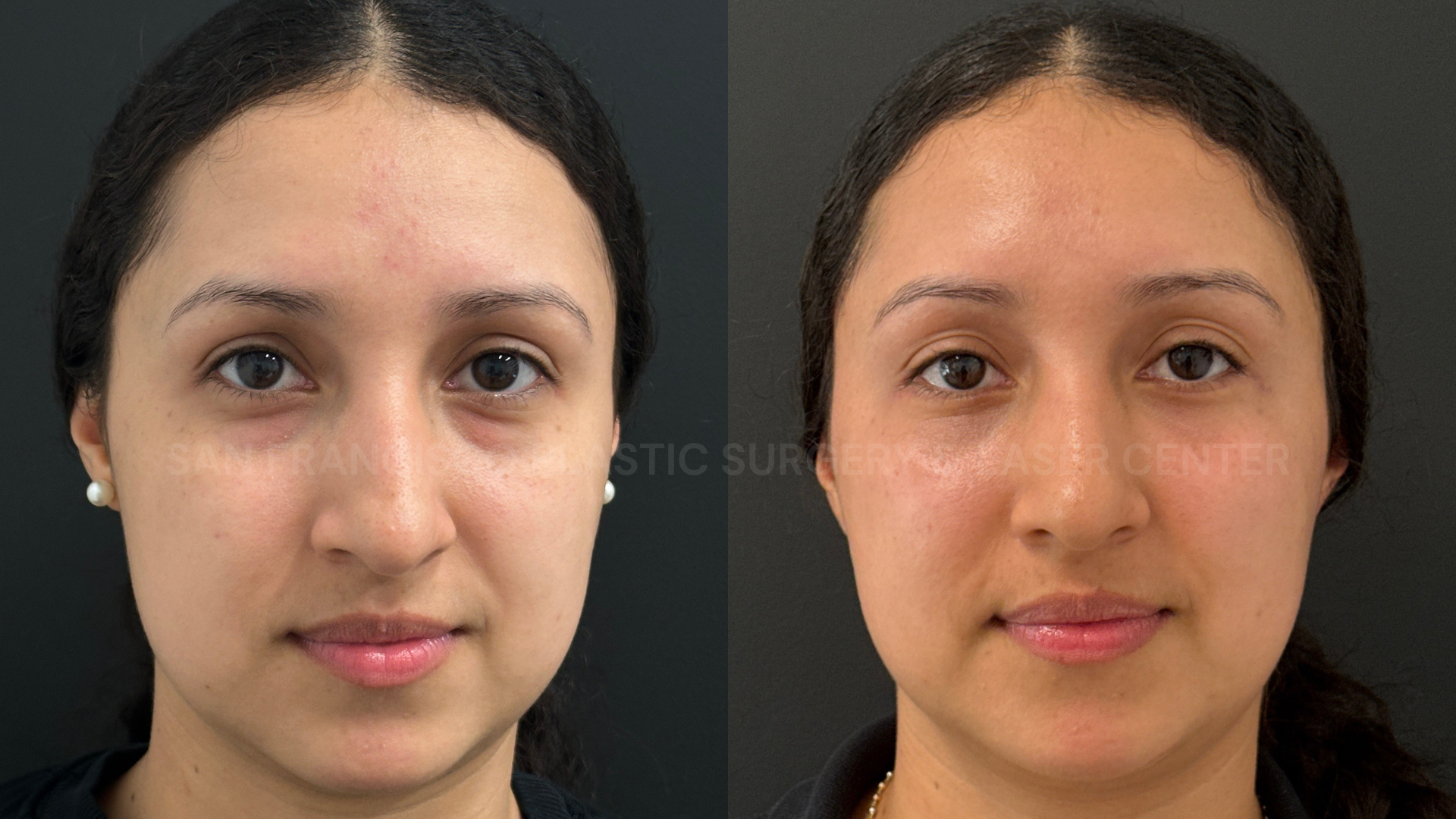
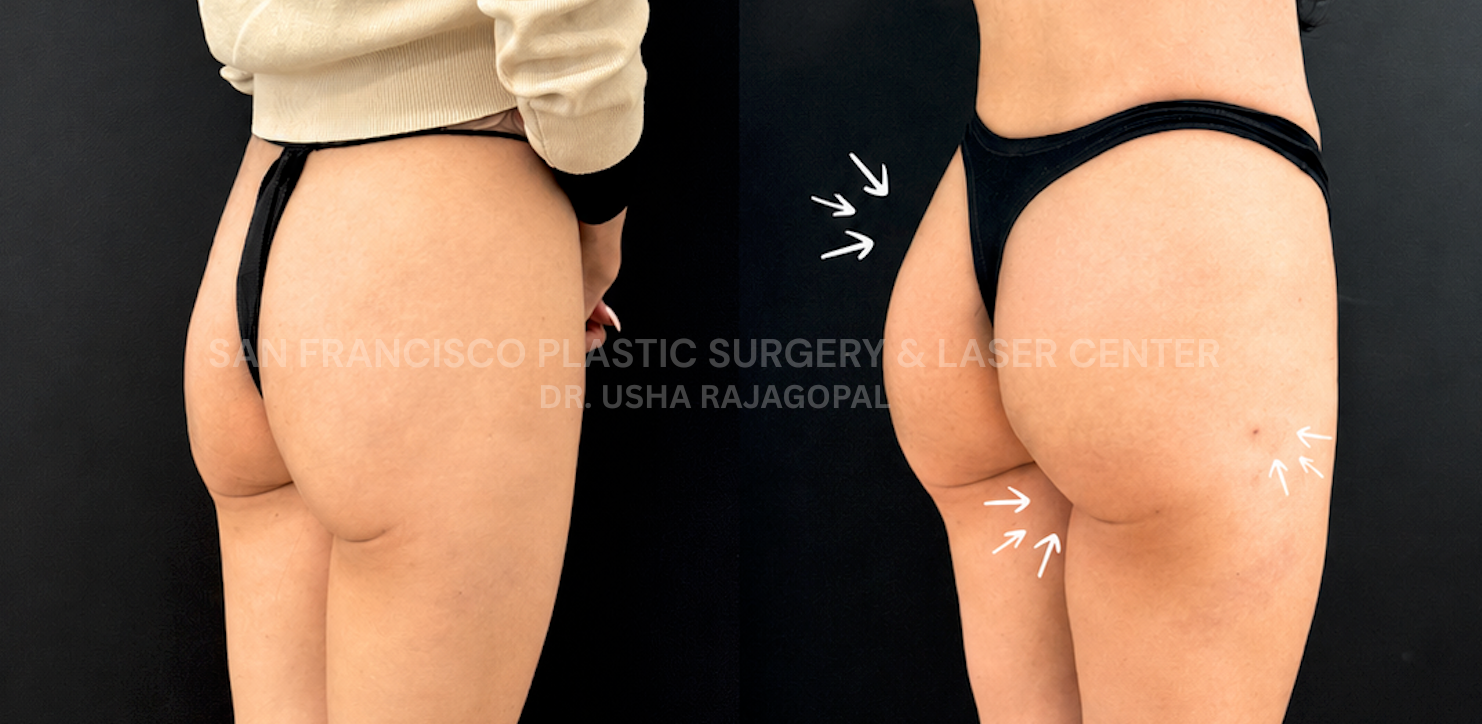
There are some people who, no matter how much they diet, or how frequently they exercise, still have disproportional bulges of fat on their body that simply won’t go away. Liposuction—a cosmetic surgery procedure in which deposits of fat are removed from the body—can eliminate those bulges, allowing the skin to redrape over the area and improving the body’s overall shape.

There are two basic techniques used for liposuction: tumescent, and ultrasound assisted lipoplasty (UAL). In tumescent liposuction, the surgeon injects a solution (made up of saline solution, local anesthetic, and epinephrine) into the area where the fat is to be removed. The fluid creates a space between the muscle and the fatty tissue, making it easier for the doctor to insert the cannula—a long, thin hollow tube—through small incisions, and suction out the fat. In ultrasound assisted lipoplasty, the surgeon uses sound waves to liquefy the fat in the targeted area, then suctions the fat out with a cannula through a tiny incision.

Within these two methods, there are various mechanisms put to work. One newer development used in tumescent liposuction is what is referred to as Power Assisted Liposuction (PAL). PAL uses a powerized cannula—because of the cannula’s mechanized movement, it involves less intensive, manual work on the surgeon’s part.

A good candidate for liposuction is someone who is in good overall health; of an average, or only slightly above-average weight; has reasonably firm, elastic skin; and who has attempted diet and exercise, but continues to have localized areas of fat on their body that they can’t get rid of. Age is not a prohibitive factor, although older patients do tend to have reduced skin elasticity, which means that they may not achieve the same results from the procedure that a younger patient might. It is important to note that liposuction does not remove cellulite—in fact, patients with poor skin quality are not good candidates for liposuction, because it only targets deep, not superficial fat (i.e. cellulite). For such patients, liposuction can actually worsen the appearance of skin by causing further irregularities.

Liposuction can have positive effects on people’s self-confidence and overall body-image, but it is important to go into it with realistic expectations. The surgery is considered to be relatively safe, but it is a surgical procedure, and (as with all surgical procedures), some risk is involved. Liposuction may not change your life completely—but with the proper mindset and approach, the results can be highly gratifying.

Follicular unit grafts is an effective hair transplantation technique that is produces long-lasting, natural-looking results. Hair follicle grafts that are transplanted maintain their natural structure, and as a result, this novel technology is beginning to replace the outdated punch grafts. Follicles are removed from the sides or back of the scalp because these are regions of continuous hair growth. These follicles are individually grafted into the needed regions and the surrounding hair covers the donor region so that the surgery is usually undetectable minutes after the transplantation.

This procedure requires small incisions, which lead to quicker recovery times and less long-term scarring. In addition, the surgeon can follow the normal pattern of the hairline of each individual’s scalp. Finally, more blood and oxygen circulate within the hair grafts, which enhance hair follicle survival. Some surgeons have further advanced this technique by utilizing ultra-refined follicular units.

Another up-and-coming form of hair transplantation that leads to natural-looking results is called LED polarized magnification, which is also based on follicular unit grafts. This technique allows doctors to create optimal recipient sites through enhanced visualization of the scalp and hair follicles. In addition, this magnification method results in shorter operating times and less destruction of healthy hair follicles, which leads to the maximal density of new hair growth [1]. The technique is currently producing long-term and natural-looking results for both men and women who have different stages of hair loss.

Patients with thick, curly hair can typically expect to see a greater density of new hair growth than individuals with thin, straight hair when equal amounts of hair follicles are transplanted for each patient. Nonetheless, treatment plans are created to meet each client’s individual needs and degree of hair loss. Furthermore, before this type of procedure is performed, doctors and medical staff usually first determine if an individual is a good candidate for this type of hair transplant.

The main reason both of these techniques lead to natural-looking results is because they are based on follicular unit grafts as opposed to the punch grafts which were used in the past. The difference between these two methods is that, punch grafts cause a blotchy, hair-plug appearance, whereas follicular unit grafts lead to dense sections of new hair growth.

References

1. Avram MR.  Polarized LED magnification for optimal recipient site creation during hair transplantation. Dermatologic Surgery, 2005;31(9):1124-1127.


The decision to have plastic surgery is not one that is just made overnight usually. There are many factors that have to be considered and many options the patient should review prior to undergoing any procedure. One decision that should be measured is whether to have a surgical procedure or choose from one of the many non-surgical routes that are available.

Plastic surgery involves restoration or correction of the form and/or function of a part of the body. This includes not only beautifying procedures, but also reconstructive surgery, microsurgery, hand surgery and treatment of burns. A facelift is one of the types of beautifying plastic surgeries.

Facelifts can also be performed non-surgically though. There are three main non-surgical procedures for the removal of wrinkles to make the face look younger: heat, lasers and liquid injections. Thermage uses heat to stimulate problem layers of the dermis, causing the body to produce collagen which tightens and firms skin. Laser treatment resurfaces and tightens the outer layer of skin. A liquid face lift involves the injection of adermal filler, which plumps and slightly lifts sections of the face. All three of these procedures are non-invasive alternatives to a surgical facelift.

When deciding whether to have a traditional facelift, or opt for one of the non-surgical procedures, remember there are differences in the results from the different options. Consider the pros and cons of each. Because everyone is different, the results obtained from any procedure will vary. In general though, all plastic surgery patients can expect some scarring (con), although it should be minimal and in an inconspicuous area. Immediately after surgery there will be some swelling and bruising but that will go away fairly quickly. It should take about three weeks for all the obvious signs of surgery to fade (con). The benefits of a face lift can last for 10 years or more and can allow the patient to look 10- 15 years younger (pro). While a facelift does not stop the aging process, with proper skin care the effects can keep a person looking younger for a very long time (pro).

One large positive aspect of choosing a non-surgical procedure, especially for someone with reservations about anesthesia is the fact that these choices do not involve surgery (pro). The results obtained will not be as dramatic as they would with the surgical option (con), however great success at reducing wrinkles is made (pro). The results will not last as long, and may have to be repeated (con); however the cost is much less than surgery (pro).

The non-surgical options are usually best for younger people trying to ward off the need for a surgical facelift for a few years and those for whom surgery is not a viable option.

    Tagged with:
     

    How to Get Rid of Tired Eyes

    The quickest and simplest way to get rid of tired-looking eyes is cosmetic eyelid surgery, called blepharoplasty. As you age, the skin around your eyes loses its stretchiness and the muscles supporting your eyelids weaken. This causes loose folds of skin to develop on your upper eyelids, deep creases to appear under you lower eyelids and excess fat to accumulate around your eyes. In the end, you are left with drooping eyebrows, sagging skin on your upper lids and puffy bags underneath your eyes. This not only makes you look tired and older but can also impair your vision.

    Cosmetic eyelid surgery offers a solution by removing this excess skin and/or fat from the eyelid area, making you look younger and more alert.

    Eyelid surgery generally takes between 1 to 3 hours, depending on the amount of tissue being removed and whether you are having your upper lids, lower lids or both done. It is usually done as an outpatient procedure—meaning you will be able to go home the same day—although some cases require an overnight stay in the hospital. It is usually done with lighter anesthesia such as twilight anesthesia.

    The surgeon will start the procedure by making tiny incisions into the natural creases and folds of the upper eyelids, as well as into the wrinkles at the corners of the eyes. The surgeon will then remove excess fat, muscle and loose skin before sewing the eyelid back together with tiny stitches. Then the surgeon will repeat the same technique on the lower lids, making incisions just below the eyelashes or inside the lower lid that extend into the laugh lines at the corners of the eyes. A highly skilled, certified plastic surgeon will ensure that any scars will be hidden by the natural folds of your eyes and will be practically invisible.

    Within a few weeks of your eyelid surgery, any swelling or bruising should completely disappear, revealing the final results – younger, more rested eyes. For some people, these results may last a lifetime, but for others eyelid drooping and sagging may reappear eventually.

    Cosmetic eyelid surgery will not eliminate laugh lines/crow’s feet, sagging eyebrows or dark circles under the eyes. As a result, you may choose to have other cosmetic procedures like a brow lift or facelift at the same time as your eyelid surgery in order to achieve the results you desire.

    Tagged with:
     

    Choosing a plastic surgeon is a very important and complex decision. Of course you want to choose someone who is board certified, has a great deal of experience and comes highly recommended. However, when you go into that first consultation you are also looking for something else – that intangible “it” that the judges on American Idol are always talking about. Of course for a plastic surgeon this has nothing to do with stage presence or singing ability, instead it is about whether you feel the surgeon understands your needs and expectations and can care for and comfort you when you are at your most vulnerable.

    Patients usually find that, as a whole, female plastic surgeons are more sensitive to their thoughts and feelings and treat them with more consideration and respect. Studies have shown that female doctors, on average, spend more time talking with their patients than their male counterparts. As a result, female plastic surgeons are more likely to take the time to extensively discuss the different treatment options available and to listen to their patient’s wants and needs to figure out what the best course of action is for that particular patient.

    For female patients, having a female plastic surgeon allows them to feel comfortable and relaxed enough to talk freely about their issues with their appearance without fear or embarrassment. Often times they want to discuss topics of a highly sensitive nature and desire cosmetic procedures for intimate areas, like labiaplasty or breast surgery. So, obviously, many women feel more comfortable talking to a surgeon of the same sex. In general, women naturally feel more comfortable talking about their body issues to other women because they believe a woman can understand and relate to their feelings better than a man. Given the empathetic ear of a female surgeon, these patients can truly open up. Plus there is the embarrassment factor. Many women do not feel comfortable undressing, let alone showing their most private areas, to a male stranger, even if he is a doctor.

    Many men prefer female plastic surgeons for similar reasons. Male patients expect to receive more empathy and sensitivity from a female surgeon. Also, men are by nature very competitive. As a result, either consciously or unconsciously, they shy away from showing signs of weakness, uncertainty or doubt to other men. This mind-set prevents them from openly sharing their problems and perceived flaws with another man, especially when it concerns sensitive issues like male gynecomastia (enlarged breasts).

    Tagged with:
     

    What Makes a Natural Facelift?

    We have all seen them – those women (and sometimes men) who look as though instead of turning back the clock with plastic surgery they have somehow gotten stuck in a wind tunnel. Their faces look unnaturally tight and even the most casual observer can tell that they had a facelift. But this is not always the case. There are ways to have a facelift and still look natural.

    A good facelift, done by a good plastic surgeon makes you look as though you have aged well; it doesn’t make you look as if you have never aged at all. Putting the face of a 20 year old on the body of a 55 year old will never look natural. Instead, a good plastic surgeon will make their patient look the youngest they possible can on the wide spectrum of “normal” appearances for their age.

    The technique used by the plastic surgeon to achieve these results is also vitally important. If you look at someone younger, you will notice that although they do not have lines or wrinkles and their faces are not tight. Instead, what makes them look young is fullness and volume in their cheeks, a well-defined jaw line without jowls and a neck that does not have lose skin or bands. These are the areas plastic surgeons focus on to achieve a natural-looking facelift.

    What most people think of as a “facelift” is actually a combination of a cheek lift and a neck lift. During this 3 to 5 hour procedure, the surgeon will make the necessary facial incisions in existing skin creases and hairy areas around the ears so that any potential scars are hidden as much as possible. Then the surgeon gently pulls the skin as well as the underlying tissue layers and muscles up and back, putting all of it back to where it was before it slipped due to gravity. Simply pulling the skin back is what gives people that unnatural ‘wind-blown’ look. Finally, any excess skin is removed.

    Younger patients usually only need this cheek lift to achieve the results they are looking for, but during a full facelift procedure, the surgeon will also perform a neck lift. A neck lift requires the surgeon to make another incision under the chin. Then the skin is tightened and any excess is removed. The surgeon may also liposuction any fat deposits located along the jaw line or under the chin and/or restructure the neck muscles, depending on the goals of the procedure. The final results generally last for 5 to 7 years.

    Combining a facelift with a brow lift and forehead lift can smooth wrinkles and raise the eyebrows, leading to a softer, refreshed appearance. During a brow or forehead lift, the surgeon will make an incision either in the hairline across the top of the head (from ear to ear) or between the top of the forehead and the beginning of the hairline. Then the forehead is gently lifted and sewn into its new position, with the excess skin being removed. Newer brow lift techniques use an endoscope (a long, thin tube with a light and a video camera attached to one end) and use much smaller incisions.

    Making cheek lifts, neck lifts, brow lifts and forehead lifts appear natural is even harder when the patient is male. Bad facelifts can leave a man looking somewhat feminine. In the case of male facelifts, it is important to preserve the hairline and sideburns and not pull the skin too tight. For men, less is definitely more. Subtle improvements look much better than dramatic ones.

    So, if you are considering a facelift it is important to remember that a good plastic surgeon will not make your face look drastically different. Instead, she will make you look like you did 15 years before – naturally beautiful.


    Labiaplasty is a plastic surgery procedure that reduces the size of the inner lips of the vulva (labia minora) so that they are smaller than the outer lips (labia majora). But what actually happens during this process?

    Before

    1. Meet with your plastic surgeon for a consultation.
    2. See your family doctor to make sure you are healthy enough to have surgery. This might mean having blood work done or an EKG depending on your age and your medical history.
    3. Book your surgery once you have been medically cleared.
    4. At least 6 weeks before: Quit smoking.
    5. 10 days before: Avoid taking aspirin, ibuprofen or any other medication or herbal supplement that might increase the risk of bleeding or bruising.
    6. 1 day before: Take any prescribed antibiotics.
    7. The morning of: Shower and completely shave the pubic area.

    During

    1. You will be given a general anesthetic to “knock you out” just prior to the procedure, as well as a local anesthetic to numb the area during (and for a few hours after) surgery.
    2. Your surgeon will mark to area to be removed.
    3. The exact procedure you will undergo depends on the surgeon and your individual needs. There are three options:

    Amputation

    Amputation is the original (and most simplistic) method as the surgeon basically cuts the labia minora down to a smaller size with either a scalpel or a laser. If a scalpel was used, the surgeon will then stitch the edge. The main drawback of this technique is that the natural edge of the labia is replaced by a scar, creating an unnatural appearance. There is also a high risk of nerve damage.1-7

    Central Wedge Resection

    Using this technique, the natural edge remains enacted because a “wedge” of excess tissue is removed from the middle of the labia.2 Once again, though, because an entire chunk of flesh is being removed, nerve connections can be damaged, which can lead to post-operative numbness.

    De-epithelialization

    De-epithelialization also removes excess tissue from the middle of the labia. However, unlike central wedge resection, de-epithelialization removes the epithelial (or outer-most) layers of tissue on both sides of the labia, rather than all of it.5 As a result, this technique preserves the edge of the labia as well as most of the sensitive nerve endings found throughout the entire structure. Tissue removal can be done with either a scalpel or a laser. The laser causes less bleeding but has been reported to cause epidermal cysts.

    After

    1. You will generally need 3-4 days at home to recover.
    2. Take Tylenol or the pain medication prescribed by your plastic surgeon to relieve your pain/discomfort. DO NOT take aspirin or ibuprofen because they can increase bruising and bleeding.
    3. Shower the day after surgery.
    4. Clean the incision site with hydrogen peroxide and put antibiotic cream/ointment on daily.
    5. Your stitches should dissolve within 2-2 ½ weeks.
    6. Swelling and tenderness should disappear within 6 weeks.
    7. It will take between 6 months to a year before you will see the absolute final results.

    References:

    1. Hodgkinson DJ, Hait G. Aesthetic vaginal labioplasty. Plast Reconstr Surg. 1984;74(3):414-416.
    2. Alter GJ. A new technique for aesthetic labia minora reduction. Ann Plast Surg. 1998;40(3):287-290.
    3. Alter GJ. Central wedge nymphectomy with a 90-degree Z-plasty for aesthetic reduction of the labia minora. Plast Reconstr Surg. 2005;115(7):2144-2145.
    4. Rouzier R, Louis-Sylvestre C, Paniel BJ, Haddad B. Hypertrophy of labia minora: experience with 163 reductions. Am J Obstet Gynecol. 2000;182(1 Pt 1):35-40.
    5. Choi HY, Kim KT. A new method for aesthetic reduction of labia minora (the deepithelialized reduction of labioplasty). Plast Reconstr Surg. 2000;105(1):419-422.
    6. Munhoz AM, Filassi JR, Ricci MD, Aldrighi C, Correia LD, Aldrighi JM, et al. Aesthetic labia minora reduction with inferior wedge resection and superior pedicle flap reconstruction. Plast Reconstr Surg. 2006;118(5):1237-1250.
    7. Maas SM, Hage JJ. Functional and aesthetic labia minora reduction. Plast Reconstr Surg. 2000;105(4):1453-1456.
    Tagged with:
     

    Many women who are considering a breast augmentation, reduction or lift are often concerned about how the surgery will affect their nipple sensitivity. For some people, breast surgery leads to lost or reduced sensation in the nipples. However, for others it causes the nipple and areola area to become more sensitive, sometimes to the point of pain. Usually these changes are temporary, lasting from a matter of weeks to a few years, but sometimes they can be permanent. It all depends on what happened to the nerves during surgery.

    Plastic surgeons take great care to protect the nerves found in the breast during any cosmetic procedure. Unfortunately, sometimes nerve pathways are impaired or damaged. The surgeon’s choice of technique often plays a key role in the patient’s postoperative nipple sensitivity.

    Augmentation

    The U.S. Food and Drug Administration (FDA) has reported that a minority of women who received saline-filled breast implants approved in May 2000 experienced nipple sensation changes after having a breast augmentation. Three years following surgery 5 to 9% of women had intense nipple sensation while 8 to 10% lost nipple sensation. Five years following surgery 10% of women had intense or lost sensation. [1]

    During a breast augmentation, the surgeon may take three common approaches to insert the implant intramamary (in the   breast crease), sub areaolar (around the nipple), transaxillary (armpit) often will cut around the edge of the nipple in order to insert the implant. Because this incision is made very close to where the fourth intercostal nerve branch enters the nipple, it is more likely to cause nipple sensation changes than other techniques. However, changes in nipple sensation are possible with any type of incision, but higher with the sub areaolar incision. Nipple sensitivity also seems to be affected more if the implant is placed under the glandular tissue rather than under the muscle tissue.

    Reduction

    For many years it was thought that loss of sensitivity depended on how much weight was removed from the breasts. However, more recently, researchers have linked postoperative nipple sensitivity with the surgical technique used. A 2005 study compared five different breast reduction techniques and revealed that removing tissue from the base of the breast leads to significantly lower postoperative nipple and areola sensitivity. In fact, the only people who ended up with completely insensitive nipples were those who underwent this type of surgery, and it occurred 48% of the time. [2]

    Lift

    Researchers have found that sagging breasts have less nipple-areola sensitivity. [3] This means that sensation changes caused by a breast lift may actually improve nipple sensitivity. However, as with any breast surgery, there is also a risk of permanent sensation loss.

    Generally, minor lifts carry less of a risk than dramatic ones, as dramatic lifts can involve completely reshaping and/or resizing the breast, as well as nipple repositioning. These invasive techniques have a greater chance of causing nerve damage that leads to changes in nipple sensitivity.

    The most important step in the decision to have any breast surgery is to choose an experienced plastic surgeon. Look for one like Dr. Rajagopal in San Francisco that has had several years of doing the procedure weekly, plus few to no patients with changes in nipple sensitivity.

    References:

    1. FDA Breast Implant Consumer Handbook 2004: Local Complications and Reoperations. http://www.fda.gov/MedicalDevices/ProductsandMedicalProcedures/ImplantsandProsthetics/BreastImplants/ucm064106.htm. Updated May 20, 2009.
    2. Schlenz I, Rigel S, Schemper M, Kuzbari R. Alteration of Nipple and Areola Sensitivity by Reduction Mammaplasty: A Prospective Comparison of Five Techniques. Plast Reconstr Surg. 2005;115(3):743-751.
    3. Schlenz I, Kuzbari R, Gruber H, Holle J. The Sensitivity of the Nipple-Areola Complex: An Anatomic Study. Plast Reconstr Surg. 2000;105(3):905-909.

    Dermal fillers are an increasingly popular way to help reverse the visual signs of aging and restore a youthful appearance. As we age, our outer most layer of skin gradually loses three of its most important components: collagen, elastin and hyaluronic acid, leading to the appearance of lines and wrinkles. Dermal fillers help stop and even reverse this process by injecting collagen, hyaluronic acid or other important substances back into the skin. All dermal fillers do not work the same way, though, so no single filler is suited for use in every area of the face.

    Juvederm®

    Juvederm contains a smooth gel made of hyaluronic acid, a naturally produced substance that absorbs water and adds volume to the skin. Juvederm is used to smooth moderate to severe wrinkles, especially those around the nose and mouth, by temporarily adding volume to facial tissues. Juvederm also is commonly used to soften acne scars and augment lips and chins. One treatment of Juvederm can last for up to one year; however, some people need a follow-up treatment after six months. Since Juvederm is not derived from animals, allergic reactions are rare.

    Restylane®

    The active ingredient in Restylane is also hyaluronic acid. It is generally used to reduce the appearance of moderate to severe facial wrinkles, such as laugh lines, worry lines, crow’s feet and marionette lines. Restylane also can be used for lip and chin augmentation, filling in under-eye hollows, softening acne scars and creating temporary eyebrow lifts. One treatment generally lasts for approximately six to eight months, although this depends on the area treated. Since Restylane is not derived from animals, allergic reactions are rare. One study estimated that Restylane treatment causes less than one allergic reaction for every 1,600 treatments.1

    Evolence®

    Johnson & Johnson has recently stopped manufacturing Evolence® due to financial reasons at this time. The product is still FDA approved and might be picked up by another manufacturer in the future.

    The active ingredient in Evolence is collagen, which works with the body’s own collagen to provide greater structure and support to the skin and to smooth moderate to deep lines and wrinkles. The most common area targeted by this treatment is nasolabial folds (laugh lines), which extend vertically from the outside of the nose to the outside of the mouth. One treatment of Evolence generally last for six to 12 months. Because this product is derived from pigs, and pig skin it is very similar to human skin, allergic reactions are rare.

    Sculptra®

    Sculptra, a stimulatory filler, contains a synthetic substance derived from fruit acids called poly-L-lactic acid. When injected, Sculptra stimulates the body’s natural production of collagen, which in turn smoothes wrinkles and folds. This is slightly different than traditional dermal fillers, which plump the targeted area with the product itself. Because of this different mode of action, Sculptra requires multiple treatment sessions over a period of two to three months, but then can last for one to two years. Sculptra is generally used for full face volume augmentation. Because Sculptra is synthetic, allergic reactions are rare.

    Reference:

    1. Lowe NJ, Maxwell CA, Patnaik R. Adverse Reactions to Dermal Fillers: Review. Dermatol Surg. 2005;31:1616-1625.


    What does the perfect butt look like?  That depends on who you ask.  If you ask different women from different ethnic groups or cultures what their ‘perfect’ butt looks like you will get different answers.  All women would like to have a shapelier butt, but their definitions of that are all different. The good news is that the Brazilian Butt Lift caters to all women and all their varied tastes.

    Just like with breast augmentation, women can get buttock implants, but for most women implants are no longer necessary to get the results they desire.  Now, with the Brazilian Butt Lift, fat is taken from other areas of the body and placed into the butt area, instead of using artificial implants.  Of course, the fat is put through a purification process before it is re-injected into the butt, making it safe.

    The purpose of the Brazilian Butt Lift is to get the contour to your backside that you desire with minimal invasiveness.  By using microinjections of your own fat, small changes can be made to the derrière to make it look exactly how you want.  The typical areas where fat is taken from are the lower abdomen, thighs, hips, flanks, and lower back.

    So, what types of butts are women getting?  Caucasian women typically like an athletic looking buttock area with muscular contours.  Latina women like the hour glass J-Lo type figure, while most African American women want a backside with more fullness, like Serena Williams. A woman chooses the areas she wants to fill out more.  In addition to filling out certain areas, some women have a saggy looking to the butt due to age.  This can also be fixed with this procedure.

    There are numerous advantages to this procedure over getting butt implants:

    1. The fat being injected is the person’s own.
    2. It removes some fat from one area, providing instant body contouring.
    3. This is the most natural and the safest type of butt lifting procedure.
    4. It gives the butt a more nature feel than with implants, with less chance of infection.
    5. Because the fat is microinjected, it lessens scarring and unevenness.
    6. The recovery time is minimal because it is a less invasive procedure.
    7. The effects last longer than implants because it is tissue from the person’s own body—it is likely to last several years to a lifetime.

    No matter your ethnicity or the type of butt you desire, the Brazilian Butt Lift is a safe, natural, fast way to get it.  Any shape or size is possible.  There are however a small percentage of women who are not able suitable for this procedure because they are thin and do not have enough fat that can be harvested from other areas of the body.  Also, some women have an unusually flat butt that only implants can fix.  The best thing is to contact an experienced Brazilian Butt Lift plastic surgeon like Dr. Rajagopal in San Francisco to see if this procedure is right for you.